What is a quadrilateral?
A quadrilateral is a closed, two-dimensional shape with exactly four straight sides. The word quadrilateral comes from the Latin words quadri-, meaning four, and latus, meaning side. Every quadrilateral also has four vertices, which are the points where two sides meet. The sides must be straight line segments, and the shape must be closed, meaning there are no gaps or openings. A shape with four curved sides is not a quadrilateral. A shape with three or five straight sides is not a quadrilateral either.
- A square is a quadrilateral because it has four straight sides and four vertices.
- A rectangle is a quadrilateral because it has four straight sides and four vertices.
- A trapezoid is a quadrilateral because it has four straight sides and four vertices.
When you classify a quadrilateral, you are sorting it into a group based on its properties. The properties you will use most often are the number of parallel sides, the number of right angles, and whether all sides are the same length.
Parallel and perpendicular sides
Parallel sides are sides that are always the same distance apart and never intersect, no matter how far they are extended. We show parallel sides with matching arrow marks. Perpendicular sides are sides that meet at a right angle. A right angle measures exactly 90 degrees. We show a right angle with a small square in the corner. Understanding parallel and perpendicular sides is the key to classifying all quadrilaterals correctly.
- In a rectangle, opposite sides are parallel, and adjacent sides are perpendicular.
- In a trapezoid, exactly one pair of opposite sides is parallel.
- In a parallelogram, both pairs of opposite sides are parallel.
The word adjacent means next to each other. In a quadrilateral, adjacent sides share a vertex. Opposite sides do not share a vertex.
Classifying quadrilaterals by their properties
Mathematicians classify quadrilaterals by looking at their sides and angles. The main properties are: whether opposite sides are parallel, whether all sides are congruent (equal in length), and whether all angles are right angles. Using these properties, we can place every quadrilateral into one or more categories. Some categories overlap because a shape can have more than one special property. For example, a square is also a rectangle, and a rectangle is also a parallelogram.
- A shape with two pairs of parallel sides belongs to the parallelogram family.
- A shape with four right angles belongs to the rectangle family.
- A shape with four congruent sides belongs to the rhombus family.
Always check all the properties before you name a quadrilateral. A shape might look like a square, but if the sides are not all the same length, it is not a square.
The trapezoid
A trapezoid is a quadrilateral with exactly one pair of parallel sides. The parallel sides are called the bases. The non-parallel sides are called the legs. In American English, we use the word trapezoid. In British English, the same shape is often called a trapezium. A trapezoid does not need to have any right angles or equal sides. However, a special trapezoid called an isosceles trapezoid has legs that are congruent and base angles that are equal.
- A shape with one pair of parallel sides and no right angles is a trapezoid.
- A shape with one pair of parallel sides and two right angles is a right trapezoid.
- A shape with one pair of parallel sides and congruent legs is an isosceles trapezoid.
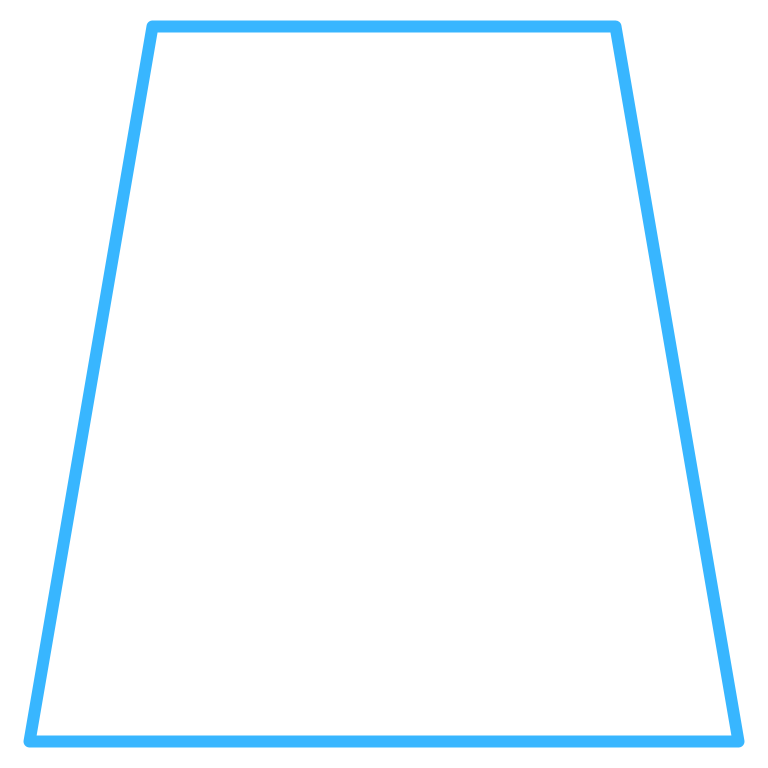
Some textbooks say a trapezoid has at least one pair of parallel sides. In fourth grade, the most common definition is exactly one pair of parallel sides. Always follow your teacher's definition.
The parallelogram
A parallelogram is a quadrilateral with two pairs of parallel sides. In a parallelogram, opposite sides are parallel and congruent. Opposite angles are also congruent. The parallelogram family is large because it includes rectangles, rhombuses, and squares. Any shape that has two pairs of parallel sides is a parallelogram, even if it does not have right angles.
- A slanted shape with two pairs of parallel sides is a parallelogram.
- A rectangle is a parallelogram because it has two pairs of parallel sides.
- A rhombus is a parallelogram because it has two pairs of parallel sides.

Every rectangle, rhombus, and square is a parallelogram. However, not every parallelogram is a rectangle, rhombus, or square.
The rectangle
A rectangle is a quadrilateral with four right angles. Because it has four right angles, it also has two pairs of parallel sides. Therefore, every rectangle is a parallelogram. In a rectangle, opposite sides are congruent. A rectangle does not need to have all four sides the same length. If a rectangle does have all four sides the same length, then it is also a square.
- A shape with four right angles and opposite sides equal is a rectangle.
- A door is often shaped like a rectangle.
- A piece of notebook paper is often shaped like a rectangle.

To check for a right angle, use the corner of a piece of paper or a ruler. Do not guess by looking.
The rhombus
A rhombus is a quadrilateral with four congruent sides. Because opposite sides are parallel, every rhombus is also a parallelogram. A rhombus does not need to have right angles. If a rhombus does have four right angles, then it is also a square. A rhombus is sometimes called a diamond, but in mathematics, the correct term is rhombus.
- A shape with four equal sides and no right angles is a rhombus.
- A shape with four equal sides and four right angles is a square, which is a special rhombus.
- A kite shape with four equal sides is a rhombus.
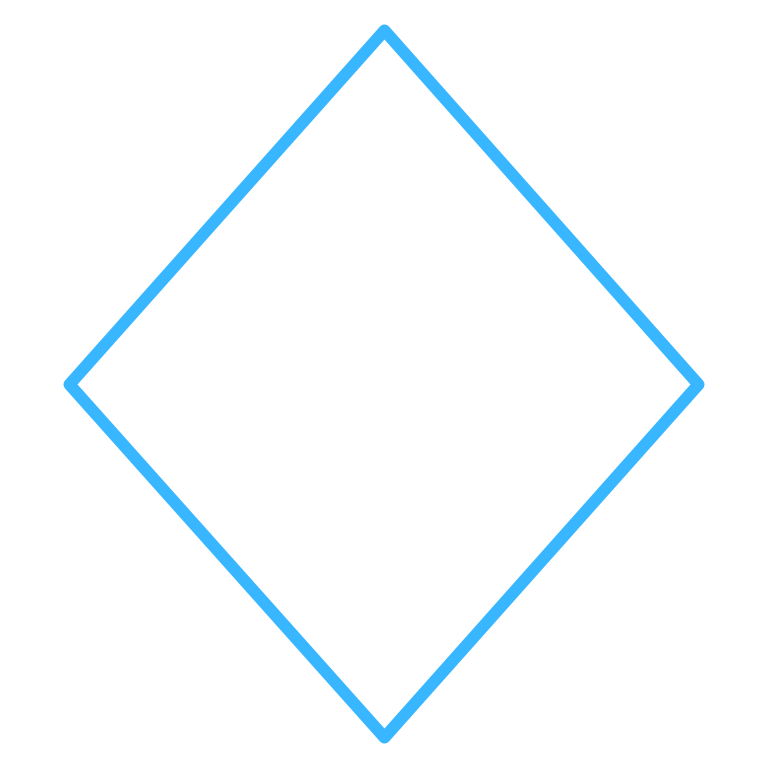
All squares are rhombuses, but not all rhombuses are squares. This is because a rhombus does not need to have right angles.
The square
A square is a quadrilateral with four congruent sides and four right angles. Because it has four right angles, it is a rectangle. Because it has four congruent sides, it is a rhombus. Because it has two pairs of parallel sides, it is a parallelogram. Therefore, a square is a special case of all these shapes at the same time. A square is the most specific classification for a quadrilateral.
- A shape with four equal sides and four right angles is a square.
- A chessboard is made of sixty-four small squares.
- A square is always a rectangle, a rhombus, and a parallelogram.
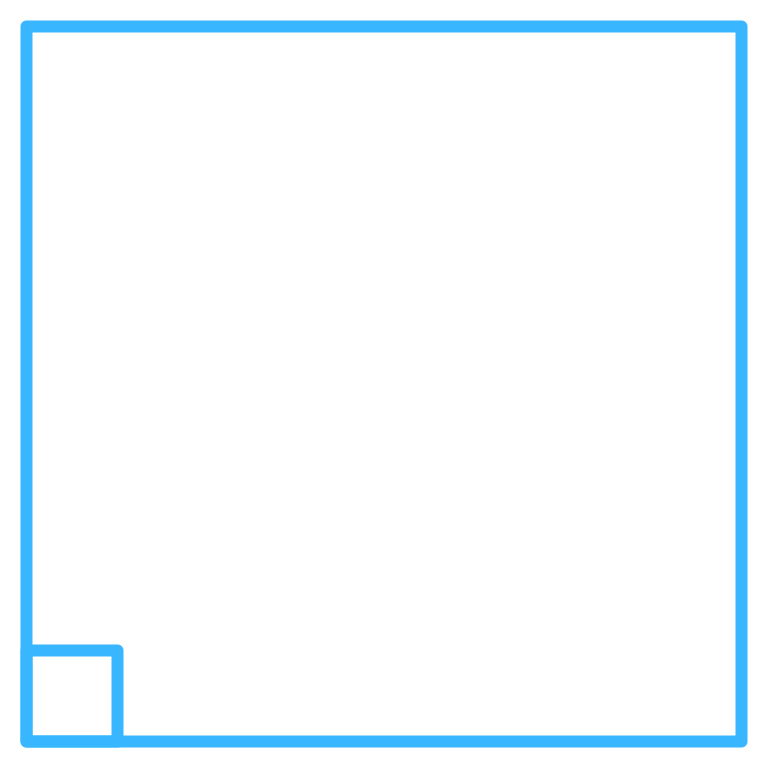
When you classify a square, you can name it a square, a rectangle, a rhombus, and a parallelogram. All of these names are correct.
The kite
A kite is a quadrilateral with two pairs of adjacent congruent sides. In a kite, the congruent sides are next to each other, not opposite each other. A kite has one pair of opposite angles that are congruent. A kite may or may not have parallel sides. If a kite has two pairs of parallel sides, then it is also a parallelogram. A kite is not always a parallelogram.
- A shape with two pairs of adjacent equal sides is a kite.
- A toy kite is often shaped like a kite.
- A rhombus is a special kite because it has two pairs of adjacent equal sides.
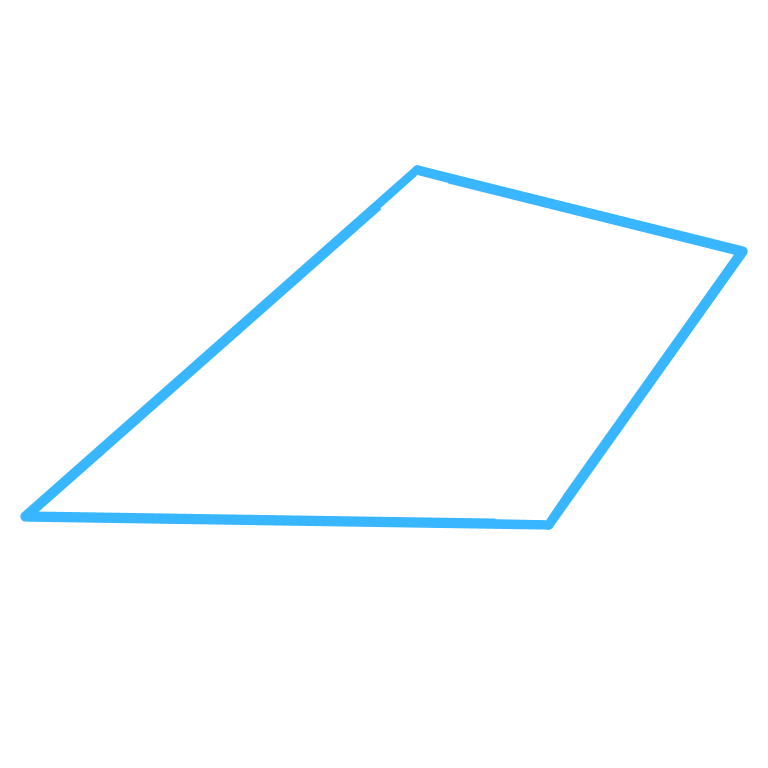
In a kite, the congruent sides are adjacent. In a parallelogram, the congruent sides are opposite. This is a key difference.
The hierarchy of quadrilaterals
Quadrilaterals are organized in a hierarchy. A hierarchy is a system that groups things from general to specific. The most general quadrilateral is simply a shape with four sides. The parallelogram is more specific because it has two pairs of parallel sides. The rectangle and rhombus are even more specific. The square is the most specific because it has all the properties of a rectangle and a rhombus. Understanding the hierarchy helps you see how shapes are related.
- All squares are rectangles, but not all rectangles are squares.
- All rectangles are parallelograms, but not all parallelograms are rectangles.
- All rhombuses are parallelograms, but not all parallelograms are rhombuses.
The word all is important in the hierarchy. Saying "all squares are rectangles" is true. Saying "all rectangles are squares" is false.
Identifying quadrilaterals in the real world
Quadrilaterals are everywhere in the world around you. Recognizing them helps you understand the shapes of buildings, objects, and even art. When you look at a shape, ask yourself: Does it have four sides? Are the sides straight? Are any sides parallel? Are there any right angles? Are all sides the same length? Answering these questions will help you classify the shape correctly.
- A window is often a rectangle.
- A stop sign is an octagon, not a quadrilateral, because it has eight sides.
- A baseball diamond is a square.
- A picture frame is often a rectangle.
Not every four-sided shape in the real world is a perfect quadrilateral. Some may have slightly curved sides or uneven angles. In mathematics, we study the perfect shapes.
Common mistakes to avoid
When classifying quadrilaterals, students often make a few common mistakes. One mistake is thinking that a square is not a rectangle. A square is a rectangle because it has four right angles. Another mistake is thinking that a rhombus must have right angles. A rhombus does not need right angles. A third mistake is confusing a trapezoid with a parallelogram. A trapezoid has exactly one pair of parallel sides, while a parallelogram has two pairs.
- Correct: A square is a rectangle.
- Incorrect: A square is not a rectangle.
- Correct: A rhombus does not need right angles.
- Incorrect: A rhombus must have right angles.
Always go back to the definitions. A rectangle has four right angles. A square has four right angles. Therefore, a square is a rectangle.
How to classify a quadrilateral: a step-by-step guide
Follow these steps to classify any quadrilateral. First, check that the shape has exactly four straight sides and is closed. Second, check for parallel sides. Count how many pairs of opposite sides are parallel. Third, check for right angles. Use a corner of a piece of paper to test each angle. Fourth, check for congruent sides. Measure or compare the lengths of all four sides. Finally, use the hierarchy to give the most specific name or names for the shape.
- Step 1: The shape has four straight sides. It is a quadrilateral.
- Step 2: It has two pairs of parallel sides. It is a parallelogram.
- Step 3: It has four right angles. It is a rectangle.
- Step 4: All four sides are congruent. It is a square.
You can stop at any step, but the most specific name is the best name. For example, if a shape is a square, call it a square, not just a quadrilateral.
Quadrilaterals and the coordinate plane
In fourth grade, you also learn to plot points on a coordinate plane. You can use the coordinate plane to draw quadrilaterals and classify them. When you plot four points and connect them, you can count the units between points to find side lengths. You can also see which sides are parallel by looking at their slopes. This connects geometry to graphing and helps you understand quadrilaterals in a new way.
- Plot points at (1, 1), (5, 1), (5, 4), and (1, 4). Connect them. The shape is a rectangle.
- Plot points at (2, 2), (4, 2), (4, 4), and (2, 4). Connect them. The shape is a square.
- Plot points at (0, 0), (3, 0), (4, 2), and (1, 2). Connect them. The shape is a parallelogram.
When plotting points, always start at the origin (0, 0). The first number tells you how far to move right. The second number tells you how far to move up.
Common Core alignment: CCSS.MATH.CONTENT.4.G.A.2 – Classify two-dimensional figures based on the presence or absence of parallel or perpendicular lines, or the presence or absence of angles of a specified size. Recognize right triangles as a category, and identify right triangles.
Notes for teachers
All content is 100% free, student-safe, aligned with CCSS.MATH.CONTENT.4.G.A.2. Use it for whole-class instruction, independent practice, or homework.